

Professional Bathroom Waterproofing Services in Townsville
Water doesn’t announce itself. It creeps behind tiles and into wall cavities long before you see any sign of damage. By the time a tile cracks loose or a musty smell takes hold, the problem has usually been building for months.
In Townsville, the tropical climate makes this worse. The wet season humidity and heat push bathroom waterproofing harder than anywhere in southern Australia — and failures happen faster.
At Townsville Bathroom Renovations Excel, we handle bathroom waterproofing Townsville homeowners can count on. Every installation meets AS 3740 — the Australian Standard that sets the rules for how waterproofing must be done. We’re QBCC licensed, which means we’re legally qualified to do this work. That matters because unlicensed waterproofing can void your home insurance and leave you out of pocket if something fails.
We offer free assessments for new builds, renovations, and repair work.
How Long Does Bathroom Waterproofing Last?
A properly installed bathroom waterproofing membrane can last 10 to 20 years or more. In Townsville, the tropical humidity and wet season conditions mean the system works harder than in cooler, drier cities — so how it’s installed matters even more here. The biggest factor in reaching that lifespan isn’t the brand of membrane — it’s whether the installation was done correctly in the first place.
What affects how long waterproofing lasts:
- Installation Compliance — work must meet AS 3740 to perform as rated
- Membrane Type — sheet or liquid membrane, selected for the application
- Junction Treatment — corners and edges are the most common failure points
- Climate Conditions — Townsville’s humidity accelerates damage from any weak point
- Substrate Preparation — the surface must be sound and clean before any membrane goes down
Licensed installation is the single biggest determinant of whether your waterproofing reaches its rated lifespan.
I WANT A FREE QUOTE ▼
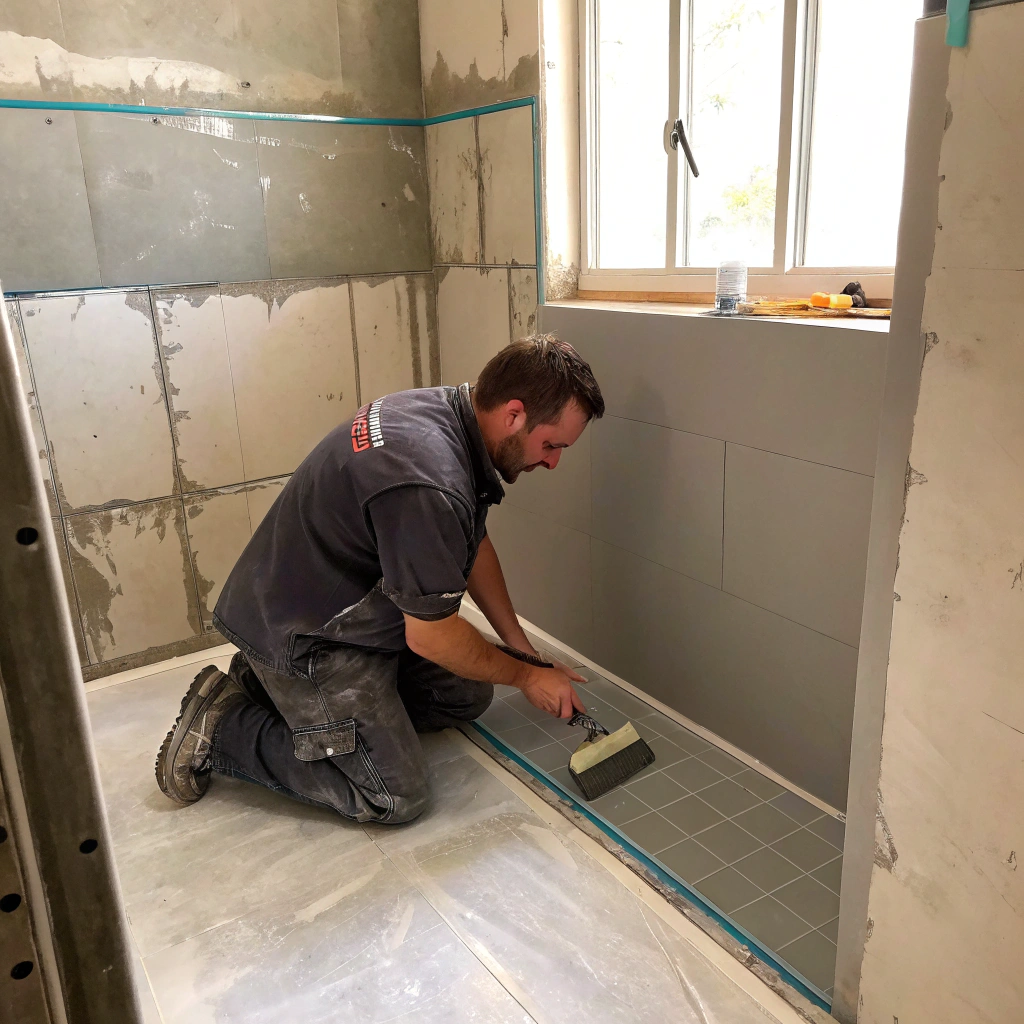
What Bathroom Waterproofing Actually Covers
Most people think of waterproofing as something that just happens inside the shower. It’s actually a whole-room system — and every part of it needs to work together.
A compliant bathroom waterproofing installation covers the shower recess floor and walls, the bathroom floor outside the shower, all junctions where walls meet floors, pipe penetrations where water can track through, and any other wet area surface specified under AS 3740.
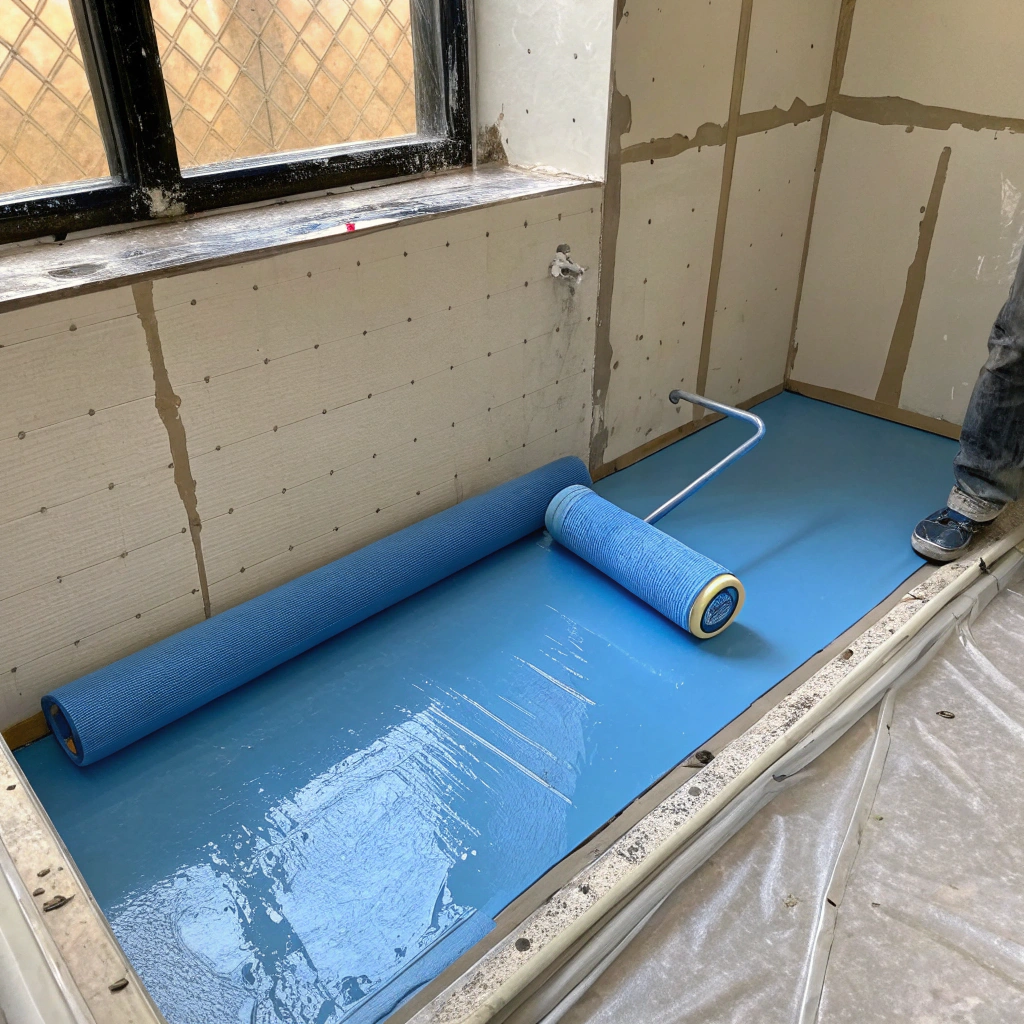
The membrane is applied across these surfaces in a set sequence, with reinforcing fabric pressed into corners and junctions before the membrane coats over the top. Each layer needs adequate drying time before the next goes down. Rushing any stage creates weak points — and weak points are where water finds its way through.
AS 3740: The Australian Standard That Governs Every Bathroom Waterproofing Installation
AS 3740 is the Australian Standard that sets out exactly how bathroom waterproofing must be done. It’s not a guideline — it’s the regulatory baseline every licensed waterproofer is required to follow.
Shower Recess Requirements
The shower recess floor and walls must be fully waterproofed to a minimum height. On walls, the membrane must extend at least 1800mm above the finished floor level, or to the full height of the wall where the shower is enclosed. The floor membrane must cover the entire recess and turn up at the edges to meet the wall membrane.
Bathroom Floor Requirements
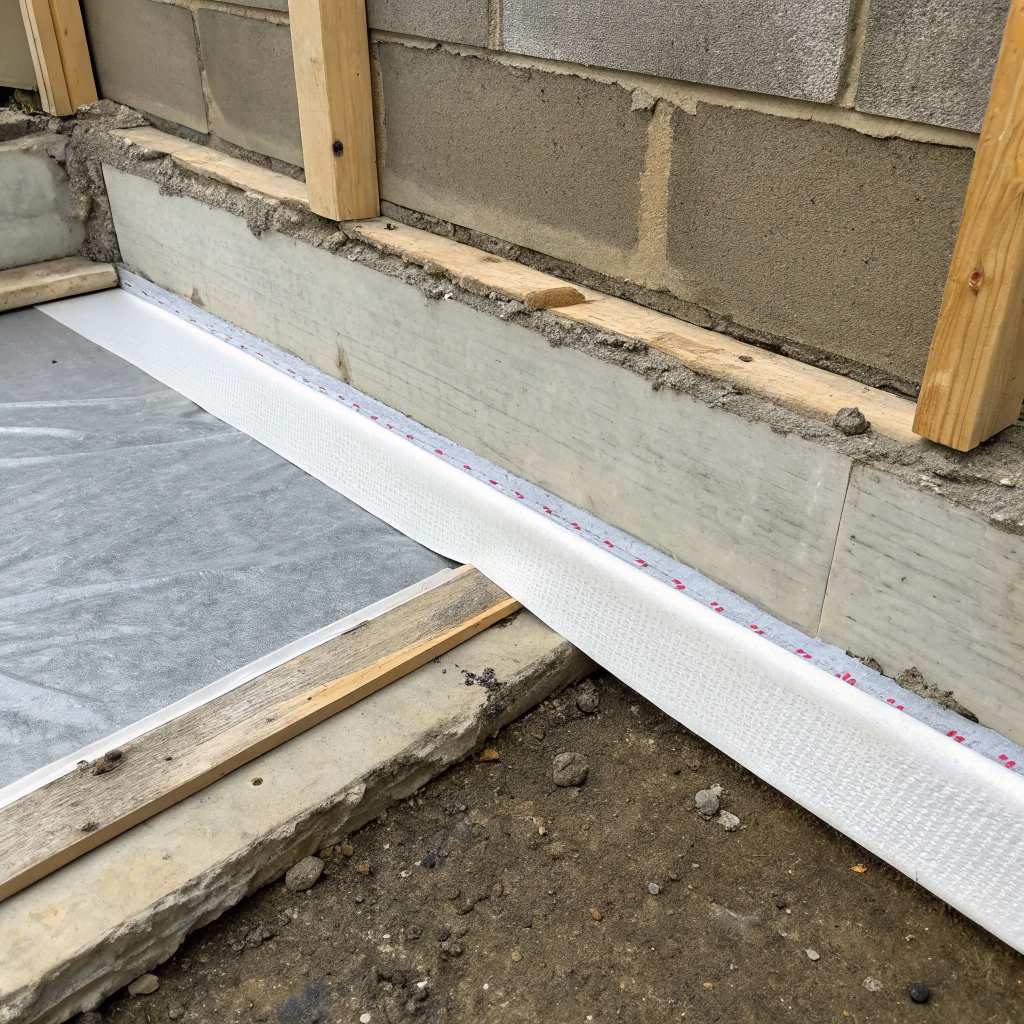
Outside the shower, the bathroom floor must also be waterproofed — particularly in wet areas where water regularly reaches the floor. The membrane must extend to floor wastes and turn up at wall junctions to stop water tracking underneath.
Junction and Penetration Treatment
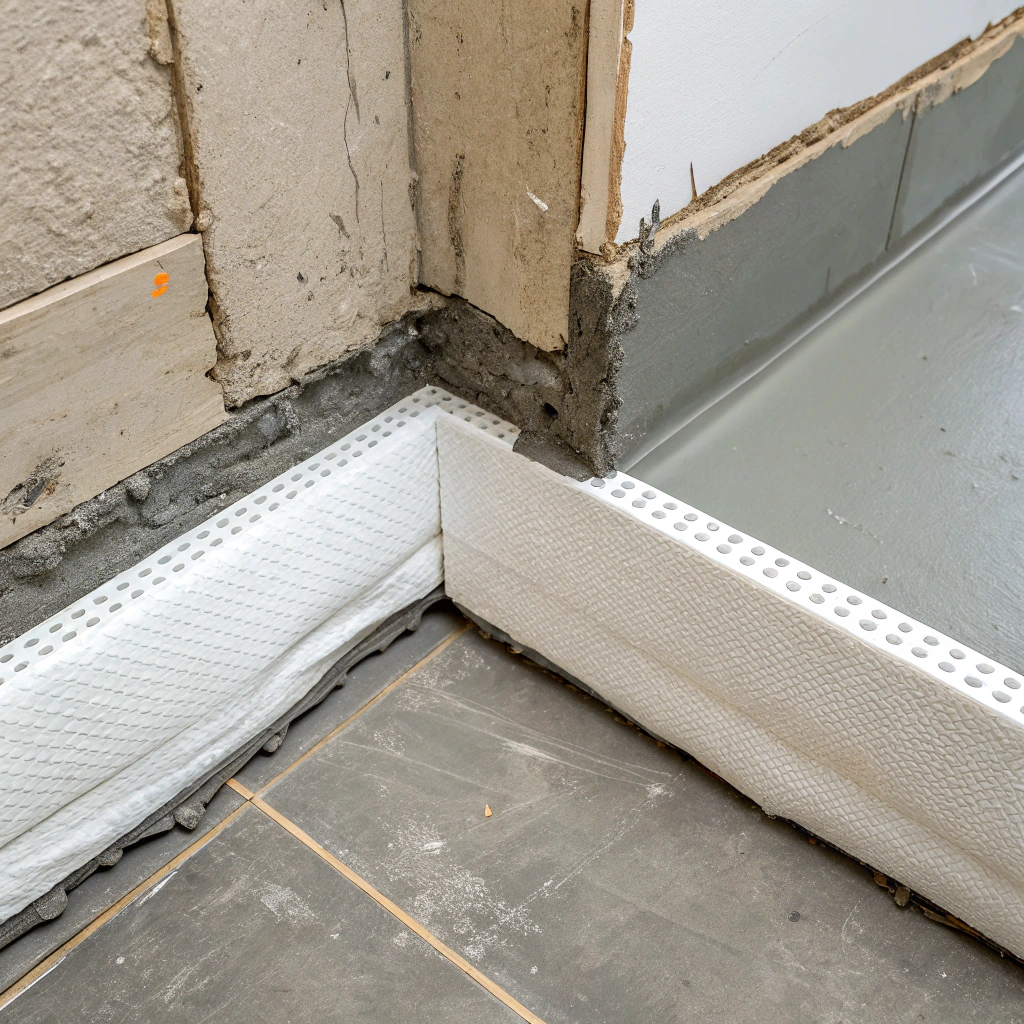
Corners and junctions are where most waterproofing failures start. AS 3740 requires reinforcing fabric to be bedded into all internal corners before the membrane is applied. Every pipe penetration — where a tap, drain, or fitting passes through a surface — must be sealed independently before the membrane goes over the top.
Membrane Curing — The Step Most Often Compromised
Once the membrane is applied, it needs time to cure fully before tiling begins. This curing period varies depending on the product used and site conditions — but skipping or shortening it is one of the most common causes of premature waterproofing failure. A licensed waterproofer will never tile over a membrane that hasn't fully cured.
Why Bathroom Waterproofing Fails
Most waterproofing failures come down to the same handful of problems. Understanding them helps explain why licensed, process-driven installation makes such a difference.
Unlicensed Installation
Waterproofing looks straightforward from the outside — brush on a membrane, let it dry. But the sequencing, product selection, junction treatment, and curing times all require genuine trade knowledge. Unlicensed installers frequently miss steps that aren’t visible once the tiles go down. By the time the damage shows up, full remediation is the only fix.
Poor Surface Preparation
The membrane is only as good as the surface underneath it. Dust, residue, moisture, or an unsound substrate will all prevent the membrane from bonding correctly. Skipping proper preparation doesn’t save time — it guarantees problems later.
Missed or Undertreated Junctions
The corners where walls meet floors, and where walls meet each other, are the most vulnerable points in any bathroom. Without reinforcing fabric bedded into those junctions before the membrane is applied, water will find its way through — usually sooner rather than later.
Premature Tiling
Tiling over a membrane that hasn’t fully cured breaks its integrity and creates pathways for water to penetrate. The damage often doesn’t show until it’s already well advanced — by which point retiling and full remediation is unavoidable.
Queensland's Licensing Requirement — Why It Matters for Your Property
Waterproofing is a licensed trade under Queensland building regulations. That means only a QBCC licensed waterproofer is legally permitted to carry out this work — and for good reason.
When unlicensed waterproofing fails, the consequences go beyond the repair bill. An unlicensed installation can void your home insurance, meaning a claim for water damage may be rejected entirely. It can also create compliance issues if you sell the property, particularly if a building inspection flags the work as non-compliant.
Licensing exists to protect homeowners. A QBCC licensed waterproofer is accountable to a regulatory body, required to meet AS 3740, and carries the appropriate insurance to back their work. When you hire unlicensed, none of those protections apply — and the financial exposure falls on you.
At Townsville Bathroom Renovations Excel, every waterproofing installation is carried out by a QBCC licensed waterproofer. That’s not a selling point — it’s the minimum standard your property deserves.
Waterproofing Remediation — When the Damage Is Already Done
Not every enquiry we get is about a new installation. A lot of Townsville homeowners come to us after waterproofing has already failed — dealing with the damage and trying to work out what to do next.
Recognising the Signs of Waterproofing Failure
Some signs are obvious. Others are easy to miss until the damage is significant.
- Tiles that have cracked, lifted, or come loose from the wall or floor
- Grout that keeps staining or deteriorating despite cleaning
- A persistent musty smell that doesn’t go away
- Soft or spongy flooring around the shower or bathroom floor
- Water stains or damage appearing on the ceiling of the room below
The Remediation Process
There’s no shortcut to fixing failed waterproofing. The tiles have to come off, the old membrane has to be fully removed, and the substrate underneath needs to be assessed and repaired where it’s been damaged. Only then can a compliant membrane be applied from scratch — following the same AS 3740 process as a new installation.
Once the new membrane has fully cured, tiling can begin. If your existing tiles can’t be reused, our tiling services can match and replace them as part of the same job. If the damage stems from a leaking shower specifically, our leaking shower repair service covers that scope in detail.
Waterproofing in Townsville's Tropical Climate
Townsville’s wet season brings sustained humidity and heavy rainfall over months at a time. That moisture load — combined with the heat — accelerates the breakdown of any weak point in a waterproofing system faster than most southern cities would ever see.
Older homes across suburbs like Kirwan, Annandale, Aitkenvale, and Hermit Park were built when waterproofing standards were far less stringent than they are today. In newer suburbs like Bohle Plains, Idalia, and Mount Louisa, poor installation practices can still cause early failure in relatively new builds.
Getting the installation right the first time — correct membrane, correct junction treatment, full AS 3740 compliance — is what separates a bathroom that holds up through years of wet seasons from one that needs remediation far too soon.
What to Expect: Our Bathroom Waterproofing Process
Assessment and Surface Preparation
Every job starts with a thorough assessment of the bathroom — existing surfaces, substrate condition, any signs of prior damage or non-compliant work. Once we have a clear picture, we prepare every surface before any membrane goes down. That means cleaning, repairing any unsound areas, and making sure the substrate is completely ready to bond with the membrane.
Membrane Application and Curing
We apply the membrane in the correct sequence — floors, walls, junctions, and penetrations — with reinforcing fabric bedded into all internal corners as required under AS 3740. Each coat is allowed to reach the correct stage before the next goes down. Once the final coat is applied, the membrane is left to fully cure before any tiling begins.
Inspection, Sign-Off and Tiler Handover
Before tiling starts, the waterproofing is inspected and signed off. This step confirms the installation is compliant and gives the tiler a clean, certified surface to work on. Every installation we complete is backed by our workmanship guarantee and carried out by a QBCC licensed waterproofer to full AS 3740 compliance.
Frequently Asked Questions
Do I need a licensed waterproofer for my bathroom in Queensland?
Yes. Waterproofing is a licensed trade under Queensland building regulations. Only a QBCC licensed waterproofer is legally permitted to carry out this work. Hiring someone unlicensed puts your insurance and your property at risk.
What is AS 3740 and why does it matter?
AS 3740 is the Australian Standard that sets out exactly how bathroom waterproofing must be installed. Every licensed waterproofer is required to follow it. We build every installation to meet this standard as a minimum — not as an optional extra.
How long does bathroom waterproofing last?
A correctly installed membrane can last 10 to 20 years or more. In Townsville’s tropical climate, how it’s installed matters even more than which product is used. Licensed installation and full AS 3740 compliance are the biggest factors in reaching that lifespan.
Can unlicensed waterproofing void my home insurance?
Yes, it can. If waterproofing fails and the installation was carried out by an unlicensed person, your insurer may reject the claim entirely. It can also create compliance issues if you sell the property down the track.
How do I know if my bathroom waterproofing has failed?
Common signs include tiles cracking or lifting, grout that keeps deteriorating, a persistent musty smell, soft or spongy flooring around the shower, and water stains appearing on the ceiling below. If you’re seeing any of these, we recommend getting an assessment done sooner rather than later.
Can you waterproof over existing tiles?
In most cases, no. To install a compliant membrane, the existing tiles need to come off so we can assess the substrate underneath, repair any damage, and apply the membrane correctly from scratch. Waterproofing over tiles rarely meets AS 3740 and won’t give you a lasting result.
How long does the waterproofing process take?
It depends on the size of the bathroom and the condition of the substrate, but most waterproofing installations take one to two days — not including curing time. The membrane needs to fully cure before tiling begins, which adds time to the overall schedule. We’ll give you a clear timeline before work starts.
Don't Risk Your Property on Unlicensed Waterproofing
Bad waterproofing is one of the most expensive mistakes a homeowner can make — and it’s usually invisible until the damage is already done. At Townsville Bathroom Renovations Excel, every installation is carried out by a QBCC licensed waterproofer, fully compliant with AS 3740, and backed by our workmanship guarantee.
Get in touch today for a free assessment and quote — no obligation, no pressure.
✔ Licensed Waterproofer | ✔ AS 3740 Compliant | ✔ QBCC Registered
Prefer to call or message?
📞0748041050 ✉ info@townsvillebathroomrenos.com 💬 Text us for a free quote
What happens next: Book your free assessment → Receive your written quote → Work scheduled at a time that suits you
